


 Canada
 Global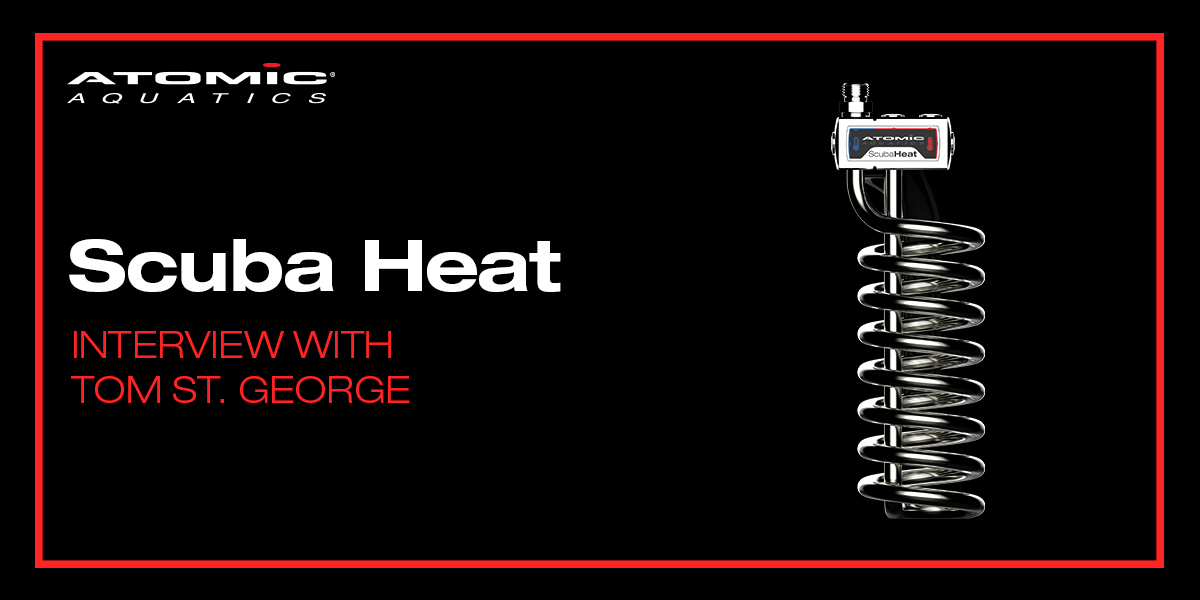
We caught up with Atomic Aquatics ambassador Tom St. George to hear about his experience ice diving at the 7th Ice Hole Festival in Lake Okoboji, Iowa. In this interview, Tom shares how the Scuba Heat helped him stay comfortable while diving in freezing conditions. Read on to learn about Tom’s experience using the Scuba Heat and how it enhanced his time underwater in one of the coldest environments.
What was the name of the event?
The event was the 7th Ice Hole Festival in Lake Okoboji, Iowa. It’s an annual event that brings people together from all over the USA – and even Canada and Mexico – to learn how to Ice Dive or qualify as Ice Diving instructors. I’ve been involved with the festival for several years now as the event photographer. It’s a really fun event that helps to keep people diving in the winter, plus it’s a great way for divers to push themselves and their skills a little further. It takes a lot of teamwork and logistics to put together a safe and successful event. There is a great atmosphere, and everyone has to work together to make it all run smoothly. You need help getting geared up, and into the water, plus people to tend the ropes we are tethered to, etc., so it has a real community spirit.
How cold was the water?
The water temperature is usually just above freezing so around 34F / 1C, but the temperatures topside can be really cold, especially early in the day (especially for someone who lives on the Caribbean coast of Mexico!). This year, I think we had temperatures between 30F and 45F so not too bad really.
How was the visibility?
The visibility can be surprisingly good. The cold water is denser which helps all the little particulate matter to settle out of the water. As long as we don’t stir up any silt from the bottom of the lake the visibility can be up to 80 – 100 ft
What was your average depth?
The diving is pretty shallow and the average depths are going to probably be 20ft or less. The light is better in the shallows near the ice, plus looking up at the ice can be quite captivating. There are the bubbles from the divers and various interesting textures in the ice. Plus the light coming through the ice, or through the holes that we cut in the ice can look just amazing.
How many dives did you do?
I try to do as many dives as I can. I capture images from the event, and of course as primarily an underwater photographer I want to capture as many underwater images as possible. Once I am geared up I will do back-to-back dives or even stay in the water between dives waiting for the next team to get in. As I end up doing at least 3 or 4 dives a day staying as warm as possible is vital – once you start feeling cold it can make it quite hard to stay in the water!
What was your previous knowledge of the Atomic Aquatics Scuba Heat?
Honestly, it wasn’t something I had come across before, but the idea just makes so much sense to me.
Did you believe the claim – ‘heats up cold air from your tank before you inhale’?
Yes absolutely, it’s simple physics after all. The gas coming out of the tank expands and cools rapidly as the pressure drops which makes it very cold. It’s not unusual for divers to get out of the water and their first stage is covered in ice for example. So passing this cold gas through a heat exchanger to warm it up to ambient temperature makes a lot of sense to me.
The Big Question – DID IT WORK? DID YOU NOTICE A DIFFERENCE?
I absolutely noticed a difference, and this year I was more comfortable in the water than ever. I was able to stay in the water longer each dive and do more total dives this year. There really are multiple benefits to using Scuba Heat. You are breathing warmer gas – so while it can only bring the gas up to the temperature of the water this is still much warmer than the gas coming out of the first stage otherwise. Not only does this help keep you from losing body heat via breathing it also helps that the air you are putting in your drysuit is also much warmer than it would otherwise be. Another huge safety benefit is you are really reducing the risk of freezing and free-flowing your second-stage regulator, as well as reducing any risk of icing up your wing or drysuit inflators
How easy was it to install the Scuba Heat on your system?
I had no problem installing the Scuba Heat. It only took a few minutes to figure out the best way to route my hoses. It sits between your first stage and your LP hoses so it takes one hose (supplied) to connect the Scuba Heat with your first stage, and then you connect your regulators and drysuit and wing inflators to the Scuba Heat. It’s very easy to install and mount on the tank via the cam band. It comes with clear instructions and the whole process is very straightforward.
Did any other divers notice or ask about the Scuba Heat?
Yes, we got a lot of interest in the Scuba Heat. Once you explain how it works it just makes sense to people that it is going to help keep you warmer and also reduce the risks of free-flowing regulators or icing up inflators etc.
Will you use Scuba Heat on your next cold water dive again?
Absolutely, you can really feel the difference and now I’ve used it I would definitely miss it if I didn’t have it for any future cold-water diving. During my first year ice diving my BARE drysuit and undergarments did keep me quite comfortable in the water but since then I have added a heated vest, and then a full-face mask to my arsenal. Now adding the Scuba Heat is the final part to help keep me toasty warm over several days of ice diving and allows me to stay in the water for longer. It’s all about comfort, the longer you can stay warm the better – I certainly will be using it for all my future cold-water diving!